1972
In Flotilla 915, there was a tradition of organizing a trip for the crew. When it was our turn to go out (873), I took the matter seriously and approached the Society for the Protection of Nature in Israel (SPNI) to get a proposal for an unconventional trip. Everyone else traveled to Saint Catherine, climbed up and down the mountain, and returned to base. I thought the crew deserved something a bit more interesting.
I received Egyptian black-and-white maps showing the mountain as a mountain and the wadi as a wadi—not topographic maps as usually used. A route was recommended to me. I got some hats as gifts for a Bedouin (Subhi) who worked with SPNI, whom I was supposed to find in a certain wadi. I was told that giving him the hat would assure him I was indeed sent by the organization.
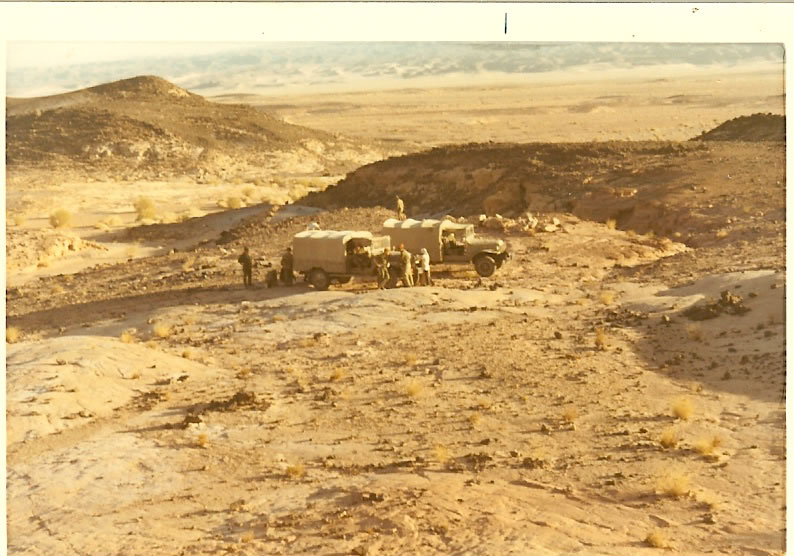
We set off in two command cars (military Jeeps) with food and supplies for four days. We found the first site quite easily—it was east of Abu Zenima, past the manganese mines of Umm Bogma. The site was a pharaonic temple called Serabit el-Khadim. Not much remains of the temple except for a few statues carved into the rock.

Serabit el-Khadim
From there, we set out to find Subhi in a certain wadi, deep in the desert. The command cars sped along dirt paths between the mountains of the desert. Sometimes we got stuck in the sand and had to get out and push the beast out. It turned out that one of our drivers was experienced and knew how to handle issues, and as nature always balances things out, the second driver lacked experience, and we feared he might burn out the coil.
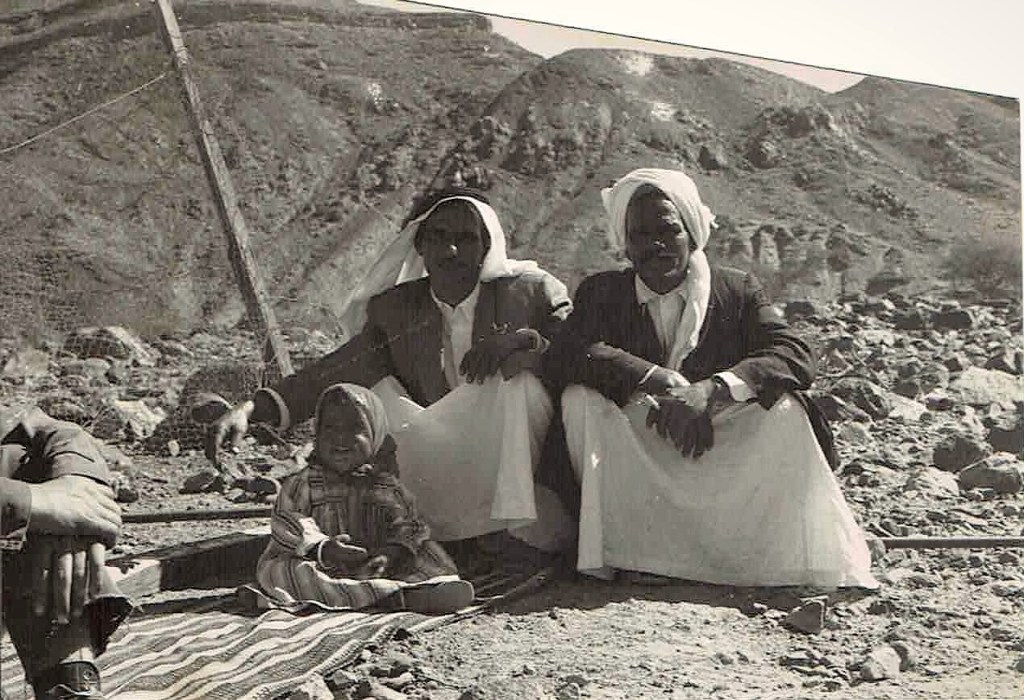
Suddenly, in the middle of the desert by the roadside, we saw a Bedouin sitting under a palm frond he had stuck in the ground, shifting with the shadow as the sun moved. The chance of a vehicle passing by there was slim, but the man had nowhere to rush to—he had no watch, and as the saying goes, “haste is from the devil.” The driver who knew a bit of Arabic asked him if he knew the man we were looking for or the wadi he lived in. He said yes and would show us the way. After wandering in the desert, we arrived at the tent where the hitchhiker lived. With hand gestures, he tried to explain how to continue further. We went on, and towards evening, we found Subhi, whom we were searching for. He invited us into his tent, served us tea, and received the gifts we brought. All of this was so he would show us the way to the “Tuvia Forest.”

Our host and guide
The Tuvia Forest is a very small area, about the size of a basketball court, filled with petrified trees. The place was kept secret because they didn’t want Israelis coming and taking souvenirs home.
As night fell, he offered us to sleep in his tent and to get up in the morning to visit the petrified forest. The Bedouin and his wives began preparing food, and I insisted they use the food we had. We gave them lots of canned goods, and they prepared rice and meat dishes for us and kept the canned goods for themselves. We really enjoyed the meal. When it came time to sleep, we tried to organize guard shifts, but the Bedouin refused and immediately arranged for his sons to guard around the tent, feeling it was his duty(Beduin tradition) to ensure our safety.
The next morning, after tea and a light breakfast, we set out to the Tuvia Forest. It was indeed a very special place with petrified tree fragments like I had never seen before.
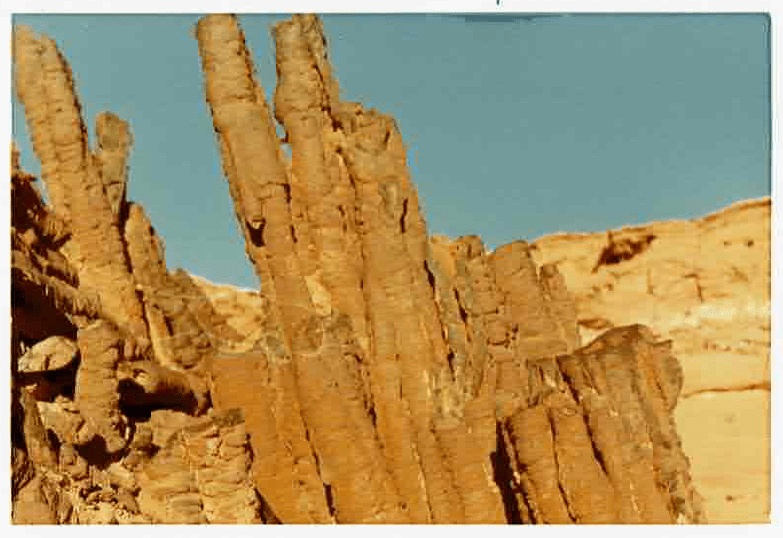
Tuvia Forest
From there we continued traveling through the desert, stopping at Bedouin tents we saw along the way for tea and stories. Returning to base was like crossing between two completely different worlds. From a world where the clock has stopped and been thrown away with no replacement, to our world which runs on clockwork and is dictated by schedules. From a world of warm, relaxed hosts to… to put it mildly, a different world.
Attaching more photos from the trip.
“haste is from the devil.”

 Yackov's English Stories
Leave a comment