Evening of October 11, 1973
We set out—three boats under the command of the flotilla commander (who was new to me)—for a patrol in the Jubal Straits near Atur. I was commanding boat 865, number three in the fleet, with Lieutenant Gardos’s boat leading. The crew made hot tea and served it on the bridge. I took a serious sip and realized it was a mistake. I hadn’t checked the temperature of the tea, and it burned the roof of my mouth. Not a great way to start an operational mission. For a moment, I thought: now that my mind is occupied with my own pain, how can I deal with others’ problems?
Troubles come in bunches, and I immediately realized another one had arrived. Lieutenant Gardos reported that he had run aground on a reef and needed to return to Sharm to repair his propellers. In retrospect, it turned out the flotilla commander had been navigating the boat.
The trouble became bigger, because the flotilla commander decided to transfer to my boat. My claim that the gyro on my boat wasn’t working didn’t help me, and I had to make a nighttime approach at sea to a Dabur-class boat to transfer the commander to my vessel. “Piece of cake.”
I brought boat number two into formation and watched Gardos’s boat limping back to base. I remember he turned on red identification lights.
Just as we were organizing to carry out the mission, we received an order to change course and join a force of Dabur boats, including those commanded by Lieutenant Menachem Reznik and Lieutenant Yaakov Abadi, under Major Ben Shoshan, near Ras Muhammad to provide support for a Shayetet 13 (Naval Commando) team that was attacking that night at the port of Aradkah.
We stood close to Ras Muhammad. Visibility was good, and the sea was relatively calm. The moon was to the southwest, almost full (about two hours before setting)—conditions that allowed us to get very close to the cliff.
Suddenly, targets were spotted south of us. A check with HQ confirmed they were not Shayetet 13 fighters. We quietly went to battle stations and prepared for contact. The targets were very fast boats, Egyptian commando “Del K” types. They were apparently on their way to attack Sharm, using Ras Muhammad as a navigational reference point. We had the element of surprise, and with steady nerves, I thought we could ambush them at close range. We could see their wakes from a distance that was still too far for our weapons’ effective range. Major Ben Shoshan’s boat opened fire from too far away, and we immediately gave chase—though their theoretical speed was double of ours. On my boat, the flotilla commander removed the right-side 0.5” machine gun operator on the bridge and started firing into the darkness, barking orders at the helmsman. I stood close to the barrel and lost my hearing. Everything started to feel like a silent movie. I tried to think, with the last drop of brain juice I had left—what should I do now? Where could I be useful? I realized the ship was being handled chaotically, and since my rank was lower than his, my responsibility was to save the crew if the ship got into danger.
Alright—back to the navigator’s table. Compass and radar—we were approaching Shaab Muhammad, the reef that Gardos’s boat had “kissed” not long before.
I climbed back up to the bridge and gave the helmsman the order: “Hard to port.” The helmsman listened to my voice, and when the flotilla commander showed displeasure (based on his facial expression, since I couldn’t hear anything), I told him we were about to hit the reef and that the ship was my responsibility.
By then, the “Del K” boats were no longer visible, and I was relieved that at least we hadn’t hit our own forces. To this day, I have tinnitus and partial hearing loss at high frequencies—but maybe that’s from something else?
When the shooting subsided, Major Ben Shoshan gave the order to prepare for a sweep to search for the escaping boats.
From my experience with missile boats, such an operation at night was complicated, but could be done quickly according to established procedures. Unfortunately, the organization in Sharm took the entire rest of the night due to unclear orders to a force that by then included all vessels in the theater.
A sweep works by moving in formation, with each vessel keeping its position relative to another. If the ships can’t positively identify the “other ship” and try to get into position based on guesswork, chaos ensues. It made me laugh—and helped open my ears to partial hearing again.
Amid that mess, an unidentified target approached from the Tiran Straits. We were dispatched toward it, and as we got closer, we heard the pleading voice of Captain Zabo (who had arrived with another Dabur from Haifa), saying he was turning on red lights and begging us not to fire on him.
In the morning, we returned to port. The night’s outcome: zero-zero.
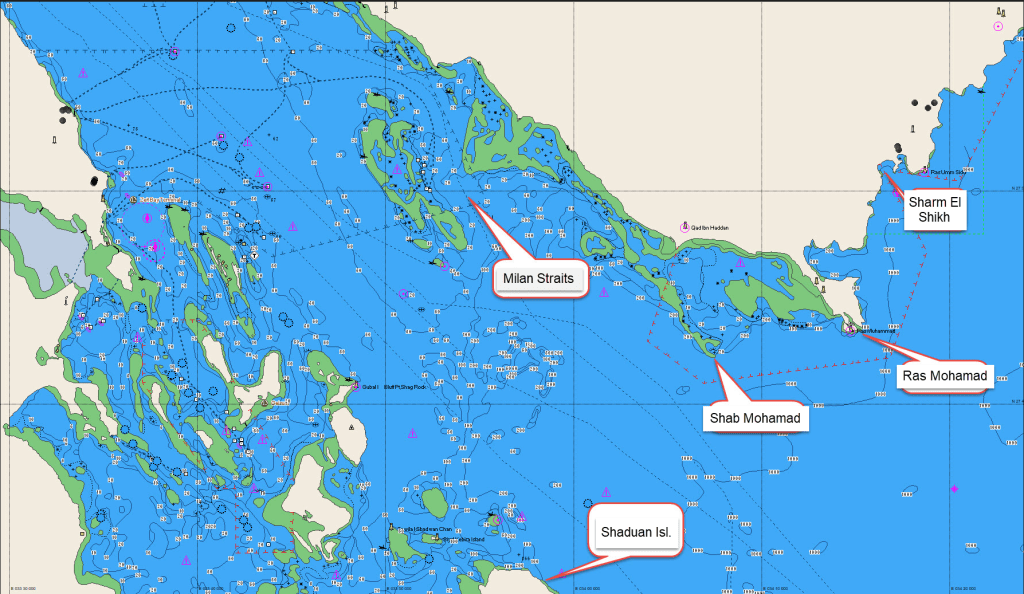
The Theater
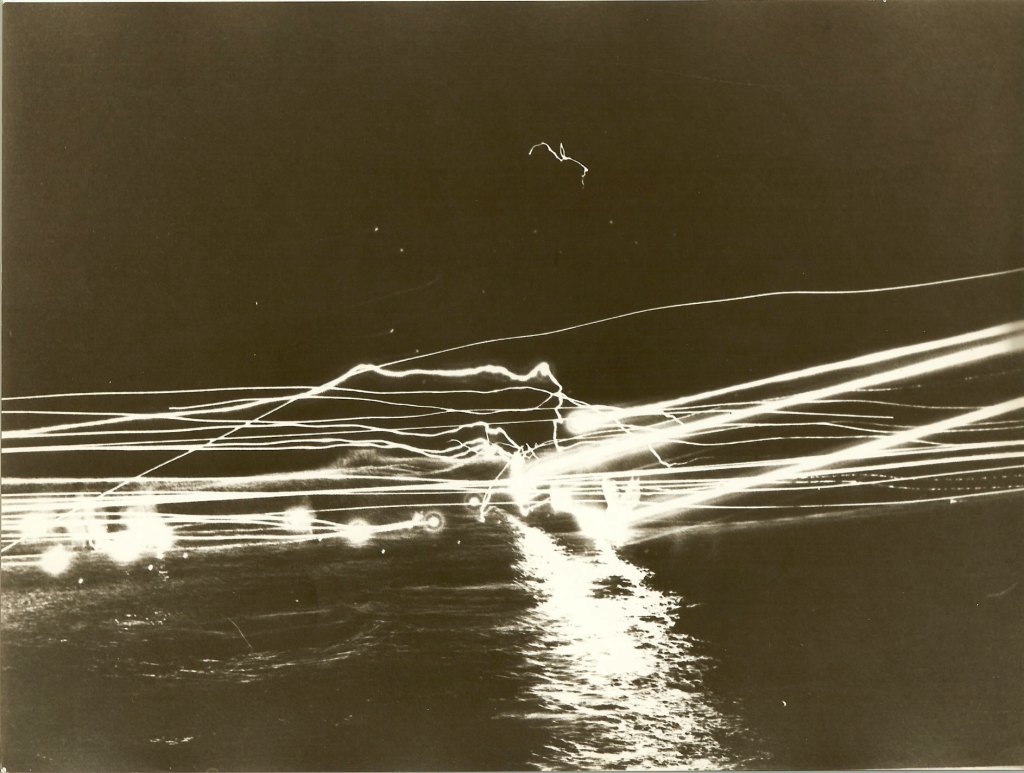
Tracers on target, when it’s done right
 Yackov's English Stories
Leave a comment