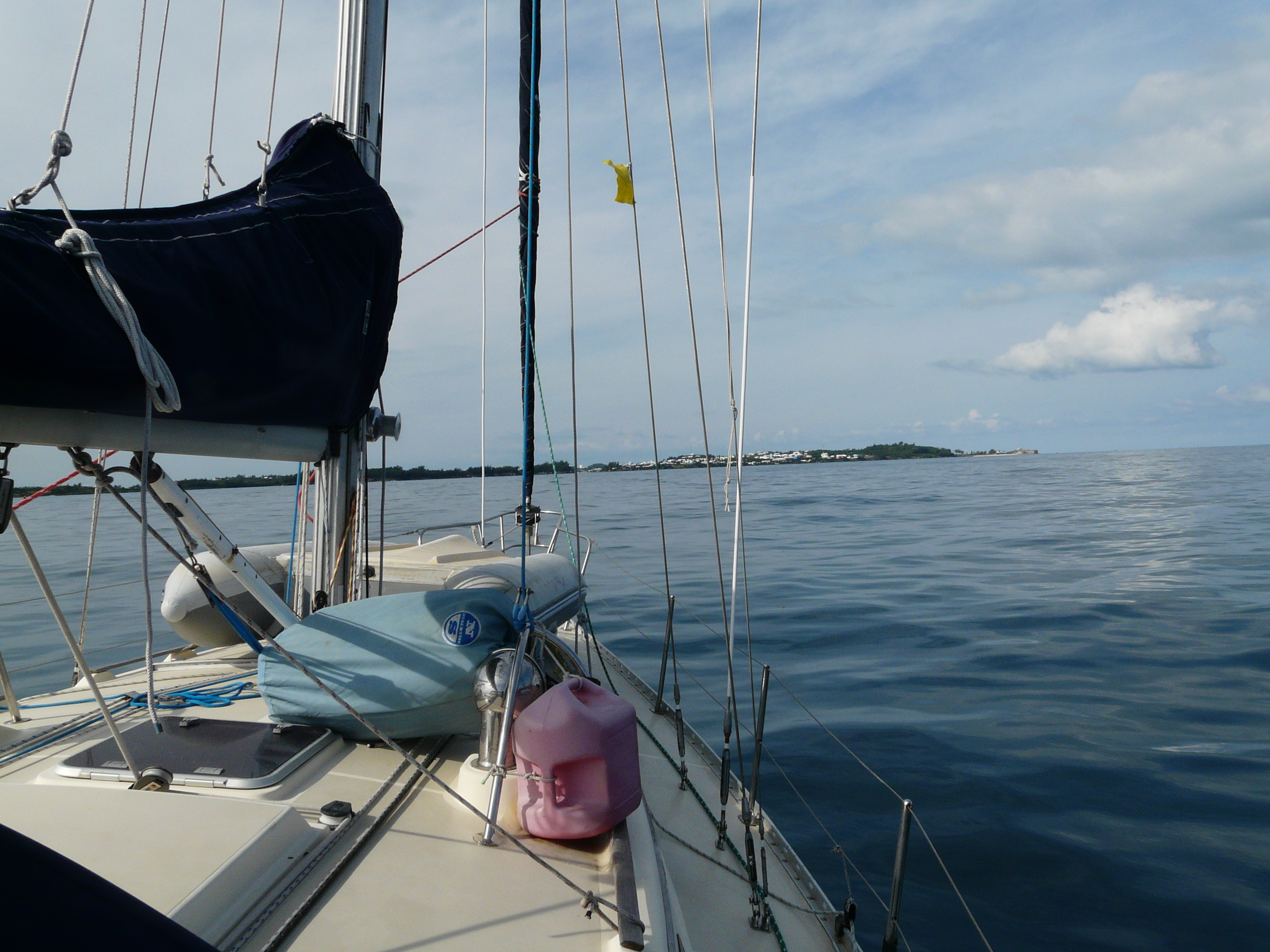
One day during the Yom Kippur War
Two Dabur boats under my command: Dabur number 865 commanded by Lieutenant Eli Gabrieli, and Dabur number 851 commanded by Lieutenant Fogel, with Zabo as an attachment.
We patrolled off Ras Zaafranah from a base at Abu Zenima, to prevent the crossings of supplies to enemy tanks that were supposed to descend from Ras Sudar toward Sharm [el-Sheikh]. That’s what I knew then. Today, I know it was nonsense—like a few other such stories.
On my boat were Eli Gabrieli and another officer who took turns on watch and rarely called me up to the bridge. Eli Gabrieli could stay alert all night without a problem.
The area remained quiet for a few nights, until one day the Arena Commander appeared with news:
“We’re going to attack Ras Zaafranah and maybe Marsa Talamat again.”
This time, it would be done using a heavy mortar mounted on an Landing ship 36 meter (commanded by Lieutenant Dudu Ayber), which would fire at the shore based on direction and range as practiced during the war. The Dabur boats’ role was to provide cover, coordinate fire, and deceive the enemy.
To avoid being immediately shelled, we sailed south to Abu Rudeis and crossed the gulf beyond the estimated range of the Egyptian radars. Then we crept along the coast northward toward Ras Zaafranah. As soon as we reached the range of the Egyptian guns, they opened ineffective fire, since they didn’t have radar guidance. I don’t think we managed to fool them.
My boat stayed behind the Landing Ship until we reached the target, then I moved northeast to a position where I was supposed to observe the mortar strikes and assist in fire coordination.
The “Arafel Net” communications channel came alive, and the infantrymen in Abu Rudeis reported that they were being shelled, but couldn’t identify any impacts. I got on the channel and asked them to calm down since they weren’t the ones being bombarded. The shelling continued, inaccurate, but from time to time, Splashes could be seen in the darkness around us.
I approached the fire control position, the mortar on the Landing Ship began firing—and I saw nothing. It was pitch black, and we couldn’t see any impacts or explosions on the shore. At some point, I fired two “Avshalom” Chaff rockets northeastward to draw fire away from us. At first, two targets appeared in that direction, but they quickly turned into a sort of cloud dispersed by the local strong wind.
The rockets were also installed on our boats during the war and were our second hope of escaping Egyptian Styx missiles. The first hope was the relatively small size of the Dabur.
During installation, no one told us about the brightness of the rocket flare. It looked like a bonfire on Lag Baomer. Because we were close to the shore, we gave away our position and drew most of the fire toward us. Shells landed near us. At sea, if a shell doesn’t directly hit, the water absorbs the impact and protects us. Of course, we started “running” like mad and changed position, a bit farther from shore.
The mortar ammo ran out—or something else did—and we started heading back to Abu Zenima. No damage, no casualties.
What happened at Ras Zaafranah? Depends who you ask.
With a hand on my heart, I can say that even though I was very close, I didn’t see a single impact or explosion from a mortar hit. Other officers and soldiers stood on the bridge with binoculars, like me, and they also said they saw nothing. Like I said: pitch “Egyptian dark”.
Epilogue
The idea of attacking with a mortar was a good one. The British navy in the Napoleonic War had bomb boats called “bomb ketches”—essentially two-masted ships with reinforced bottoms and a mounted mortar. The masts were set a bit aft, so they were called ketches. Execution, however, is another matter.
In his book, the Arena Commander writes (page 868) the details of the mission and concludes:
“They emptied the remaining 30 shells, and we cast one last glance at the anchorage engulfed in flames.”
In my opinion, there’s no room for a Rashomon here. On the Dabur’s, we were about 22 officers and soldiers. Not a single one saw “flames.”
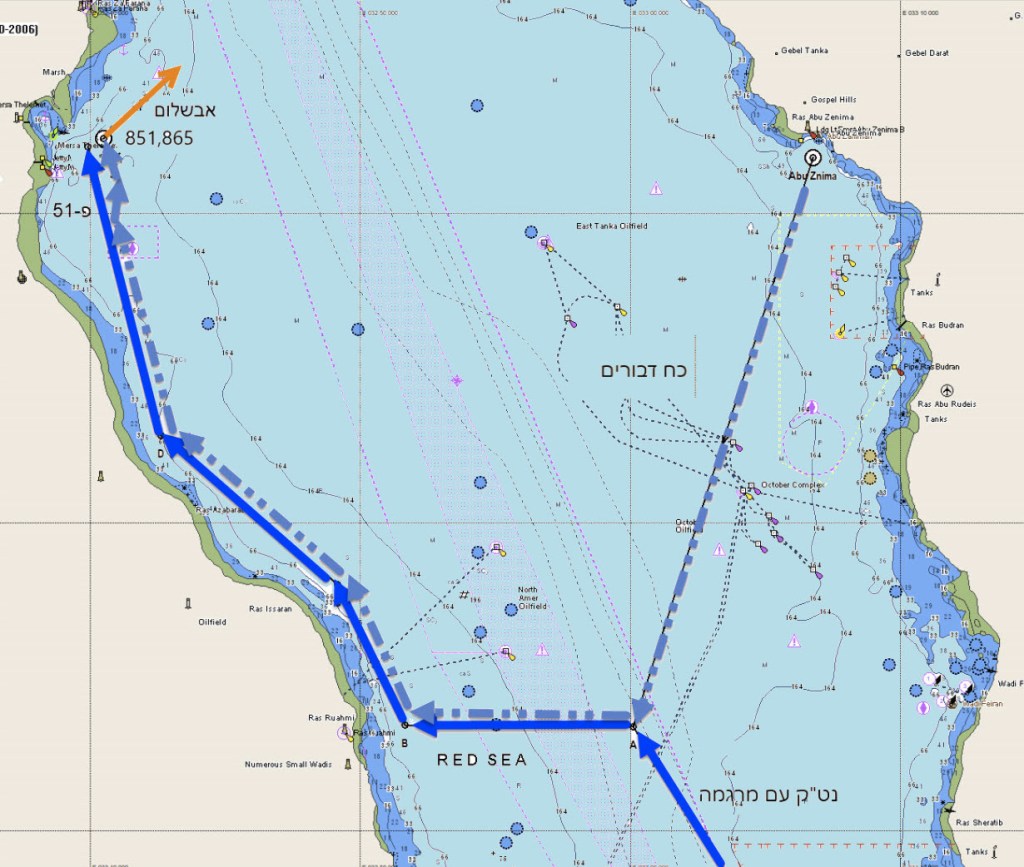
Map of the mission
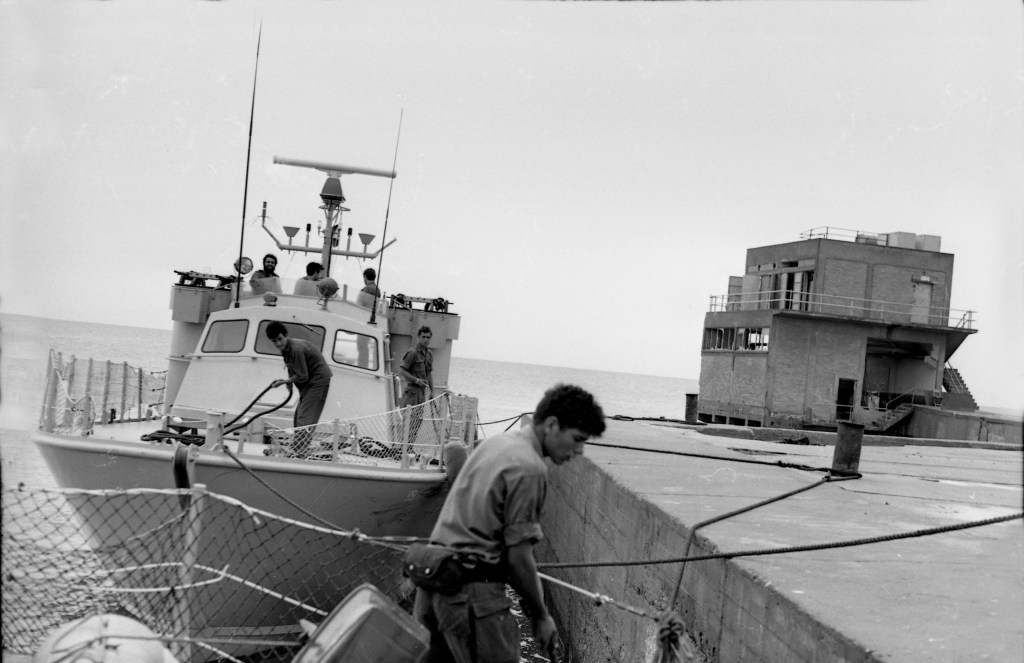
Dabur’s in Abu Znima

The landing ship
 Yackov's English Stories
Leave a comment