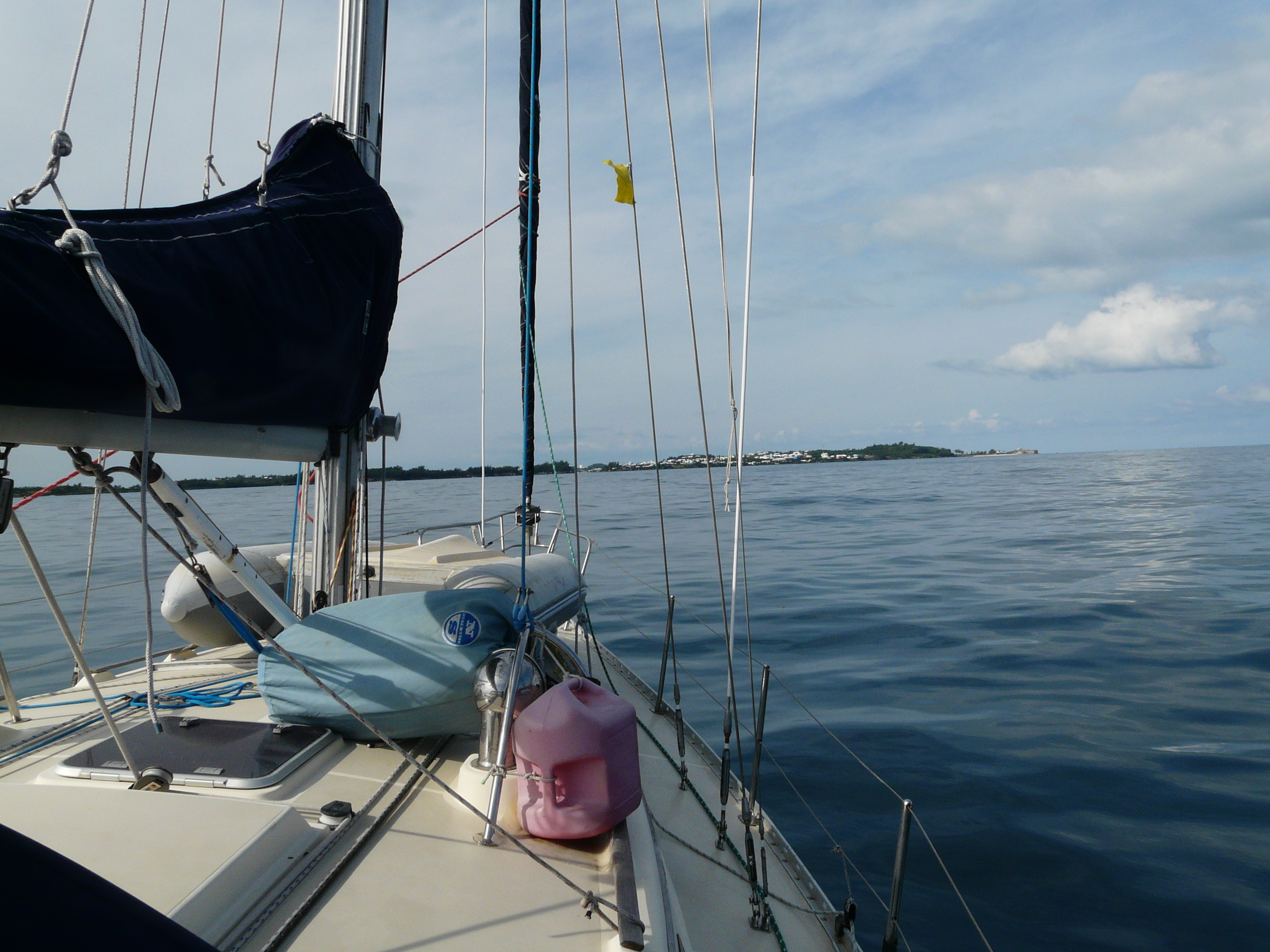
Until then, in my childhood, I knew the sea through Saturday trips on the back of a truck with benches lined along the sides and two rows of benches in the middle (back-to-back). The passengers’ legs intertwined like a zipper. There were no sectorial problems, and no complaints were heard. The food baskets were under the benches along with equipment for building tents, and we kids would gather at the back of the truck, clutching the inner tubes we had prepared in advance. The debate was whether to go to Riviera Beach or Sela Beach, as the Rishon Lezion beach didn’t exist yet.
When I was drafted (August ’68), I joined the naval officer’s course because it was “a challenge for a man.” The army wanted me to serve as an electronics technician (since I was an ORT graduate), but I didn’t want to be a “jobnik” (someone in a non-combat role).
So, one morning after boot camp at Bahad 4, I found myself on the banks of the Kishon River in tents, facing a row of “Liviyataniyot” (small rowing and sailing) wading in the water. The instructors—Liebsman, Tshonela, Buber, and others—started turning us into sailors. They were born seamen, serving in the reserves, while most of us were high school kids who had never seen a ship up close.

Rowing on “Livyataniyot”
The instructions on the shore were delivered gently, but once we were in the boats, the shouting began. At first, a week of “Ve-chatorrrr!” (Roowww!) and then “Main line tension!” “Release!” “Head to wind!” “Down, down, down!” My feelings were mixed. On one hand, amazing scenery—water, sky, and rain without water (Translated from Hebrew phrase). On the other hand, nagging for the sake of nagging that we could have done without. The pill was sweetened by the Yiddish jokes the veteran sailors shouted to each other during the voyage.
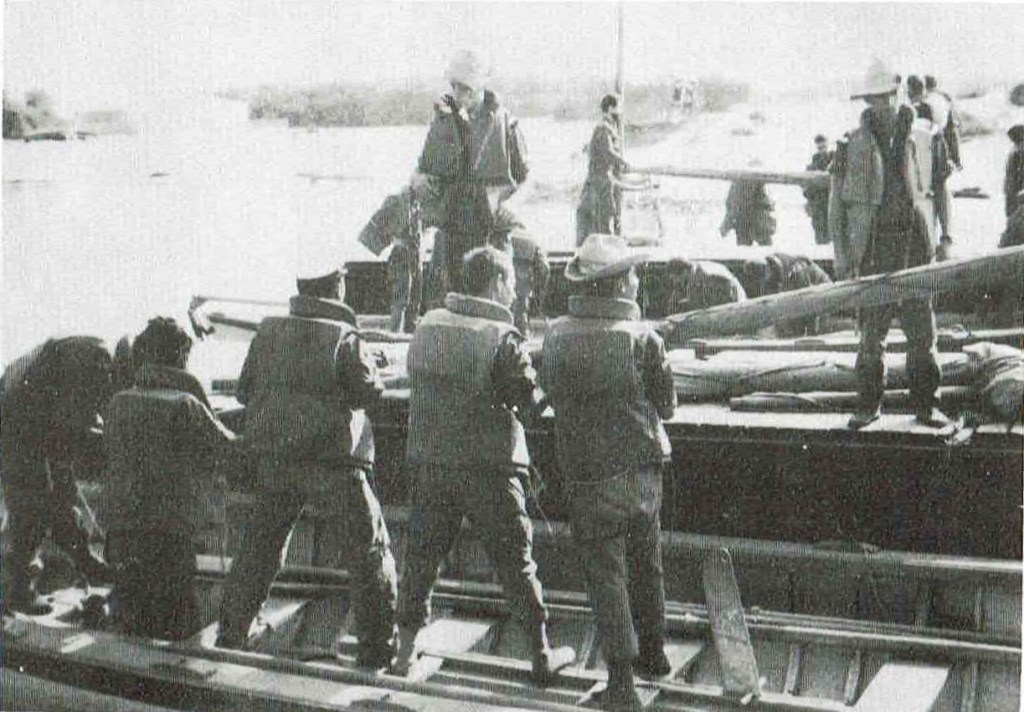
Boat setup
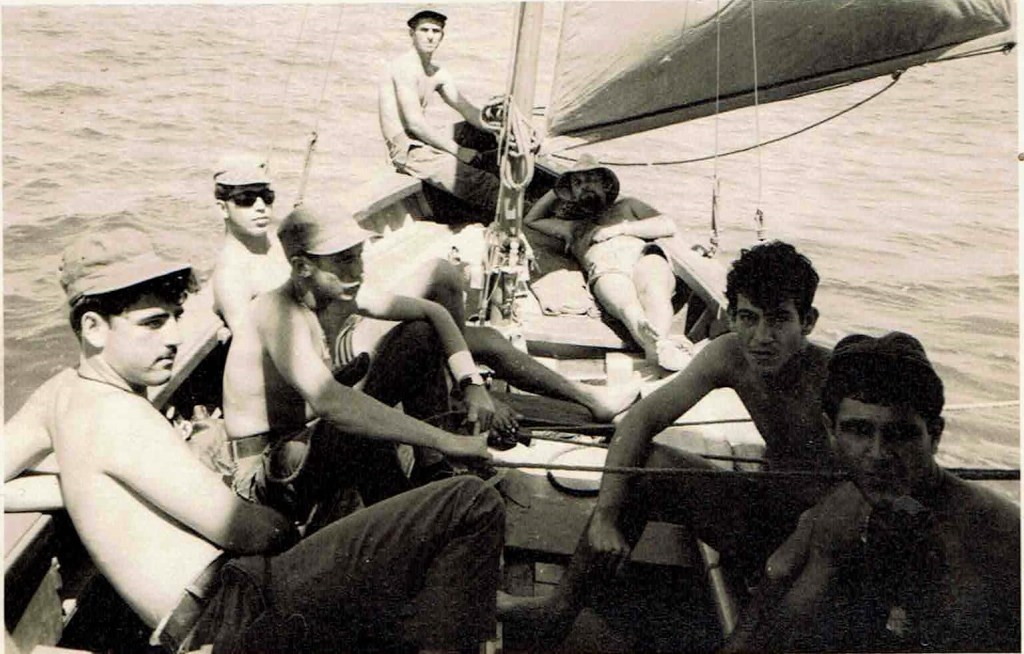
Having fun sailing to Bardawill

The yacht voyage from Haifa to Bardawil took place around Yom Kippur and suffered from many hours of calm that “took the wind out of our sails,” quite literally. Fun is when the boat moves. When it’s still, it’s torture. I, who had had enough of the yelling, asked to be the bilge water-pumper and thus spent hours under the benches, far from the “evil eye.” In the end, everyone had enough, and we tied up to a naval Landing Ship that respectfully towed us back to base.
We learned the rest of our seamanship in the course and finished more or less as rookie sailors.
Serving on missile boats added to my seamanship and gave me confidence at sea, but above all, I remember the sailing trips to Cyprus on the 590s(19.3 Feet long)—small sailboats donated to the Navy club by the shipyard owner that built the missile boats in Cherbourg.
Ami Sharel managed to convince Navy Headquarters to let us sail to Cyprus on these boats, which had no engine, electrical system, water, or any other amenities. The boat had a swing keel, sails, and a boom. Up front was a structure with two benches along the sides that one could sleep on. We sailed each boat with four crew members.
The organization was just the kind Ami could pull off. Food was purchased at the sailors’ duty-free store, so we could enjoy cheeses and cold cuts we didn’t know in Israeli stores (like “La Vache Qui Rit” processed cheese, for example). Everything worked like clockwork: prepping the boats, equipment, an outboard motor in case of emergency, a rifle, flashlights, water, and food.
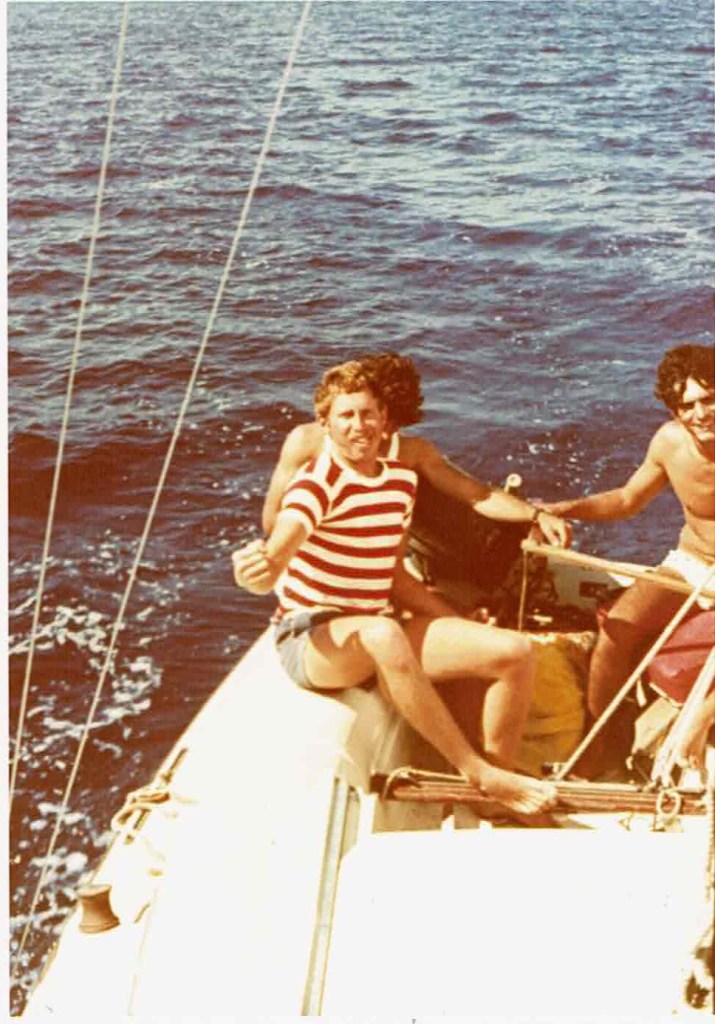
Saling to Cyprus
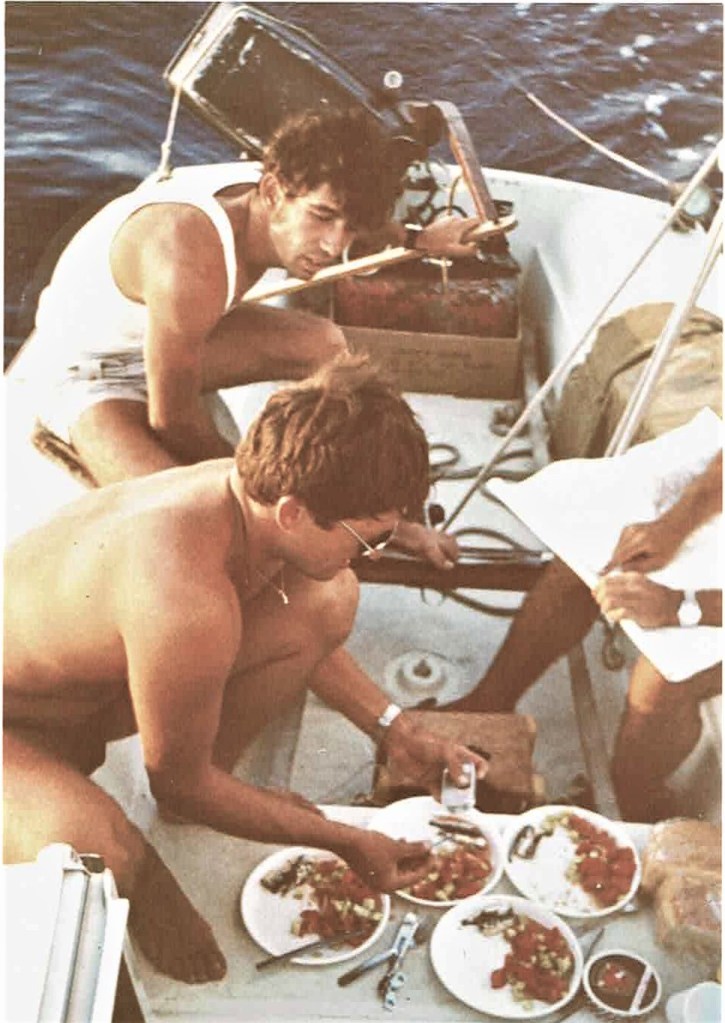
The group included naval officers and others like crane operator Egozi, meteorologist Gideon Miron, Yuval Yassur, and more.
We sailed in two boats during the relatively calm season between Rosh Hashanah and Yom Kippur. We entrusted navigation to the capable hands of Yaak Kahanov, who brought a map and a navigation distance meter device with a propeller. We even tried to calibrate the device with coastal navigation at the start. When we didn’t make progress fast enough and the propeller at the end of the rope showed we were standing still, we threw small Styrofoam pieces at the bow and measured how long it took them to reach the stern. The food was excellent, and the voyage was full of humor and a relaxed atmosphere that we—Shimon Meir, Yaak, Ami, and I—created. No shouting, no orders. The stunning view of sea and sky from horizon to horizon added to the mood, even though we endured hours of calm that lengthened the journey. But we weren’t in a rush.
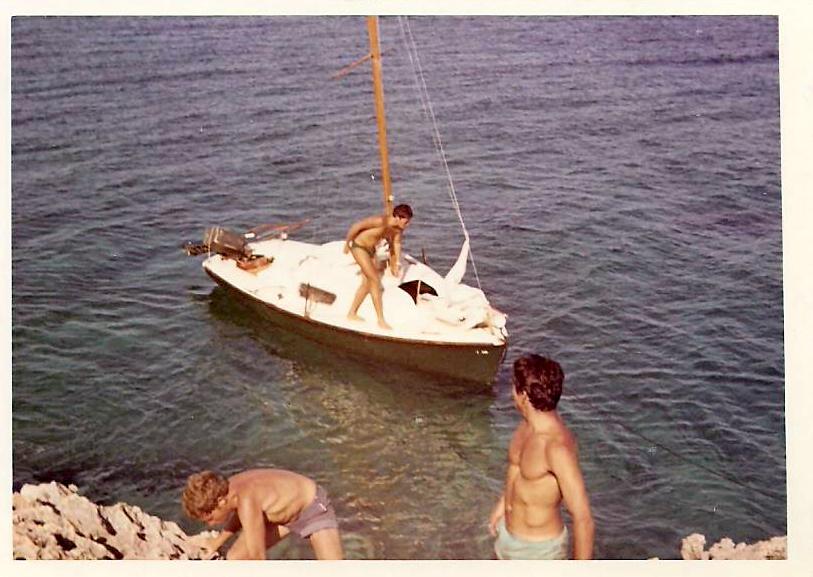
Cape Greco, Cyprus
We reached Cape Greco about 50 hours after departure and caught winds from the shore that quickly took us north to Famagusta, skimming close to the coast in a way that terrified me. The competition between Ami and Yaak brought the boat just meters from shore. The water was clear, but all we had was a keel, and we were at the coast of a foreign country. One hit on a rock and we’d be “washed ashore”—and then what? That’s what I thought.
They were very skilled, and we reached Famagusta. Ami handled logistics and took us to the office of Papa Vosiliou, a colorful figure who helped Israel and the Navy unconditionally. There, a taxi was ordered, we exchanged currency, exchanged greetings, and headed off to Troodos to a hotel with a pool for two days of rest.

Famagusta, Cyprus


The fun on the island was above and beyond. Like in the scouts, we “decorated” Shimon Meir’s face with toothpaste while he snored. We toured the island by taxi and bike, ate mezze, and after a week returned to the boat—not before buying some electrical appliances like mixers that filled the cabin. (Buying appliances was “mandatory for anyone sailing to Cyprus. It was much cheaper than baying them in Israel.”)
On the way back, the mission was to return before Yom Kippur began, as everything shuts down then.
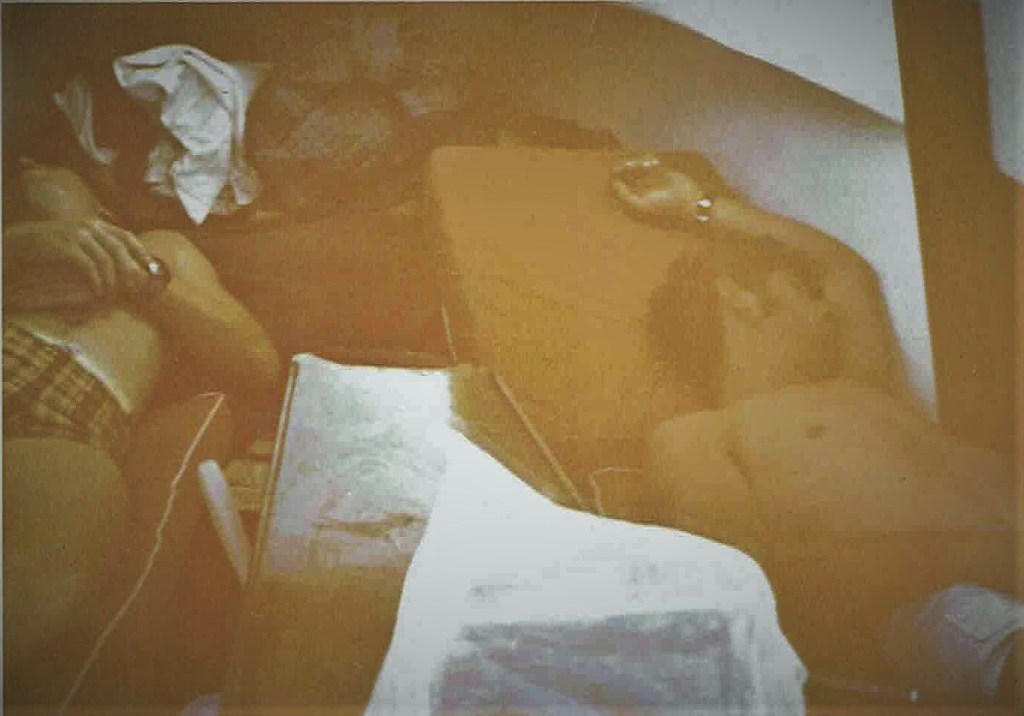
The Sleeping quarters in the boat
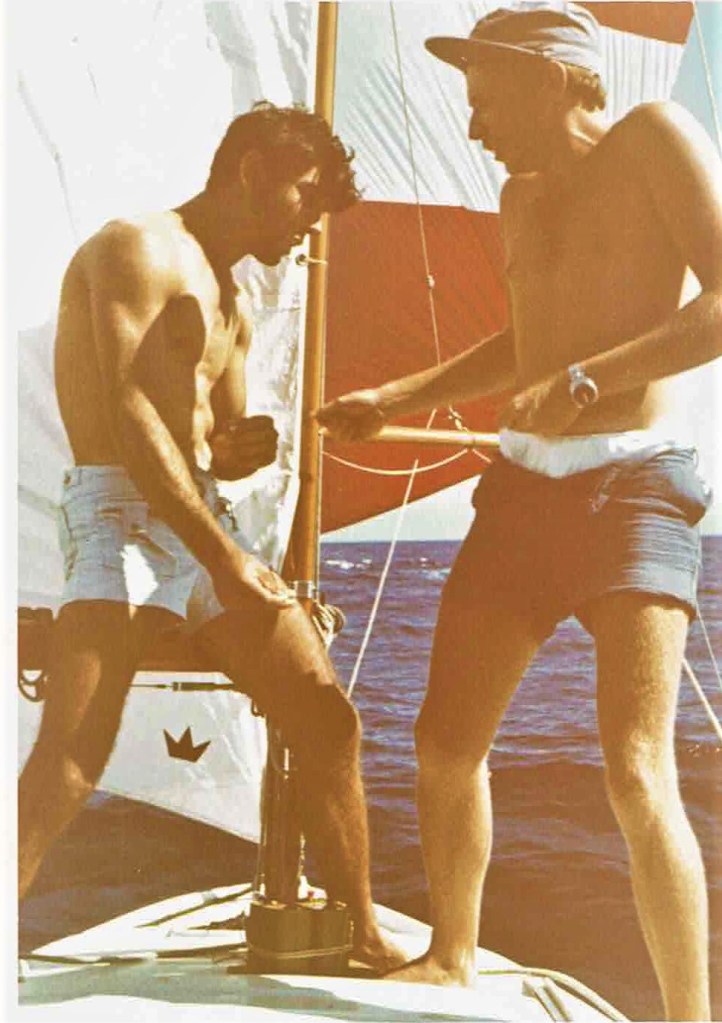
There was also dancing

Spinnaker sailing
The wind didn’t cooperate at first, and after about twelve hours of drifting, we saw the mountain in the distance, and it was hard to tell whether we were looking at Beirut or Haifa. Some in the boats had already “spent time” in a POW camp and didn’t want to risk a repeat. We decided on a course that would bring us closer to shore but keep us “safely distant.”
A northwesterly wind began to blow. The spinnaker was pulled from its bag and spread in all its glory before the bow. The boat surged forward, clearly pleased. The shore came closer, and we recognized some landmarks. We were happy to see it was Haifa. The spinnaker carried us swiftly to a port that was already beginning to empty out ahead of the fast. Customs officials saw us from afar, thought it was a ship, realized it was a small sailboat, signed us off, and left.
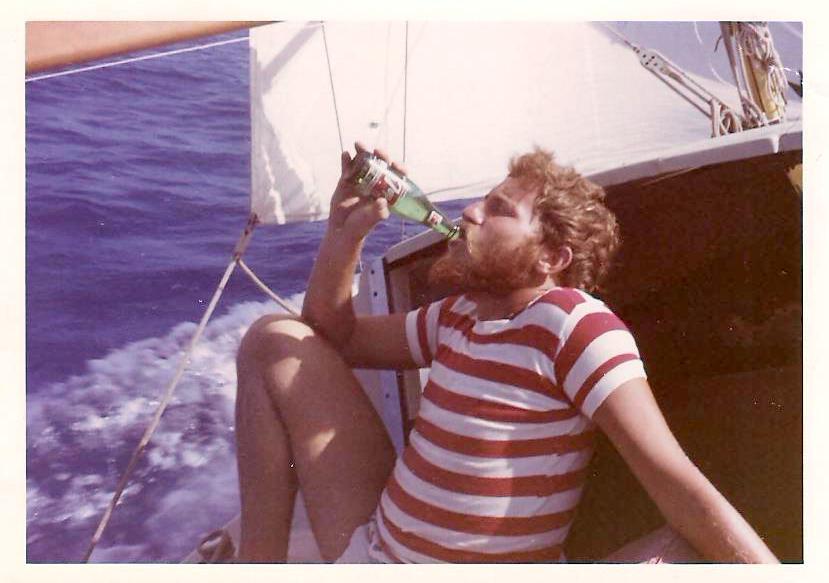
Sailing is the taste of life
I participated in two such voyages that left a lasting impression on me.
Many years later, I bought a sailboat and remembered the joy a boat can bring. A voyage without banter isn’t a voyage, so for longer journeys, I sail with friends from my Navy service like Menahem Raznik, Moti Kagan (Class K), Ami Sharel (Class Yod-Daled), and Gambash (Class Yod-Chet). The voyages are in tidal waters, meaning currents that must be accounted for, and meteorological conditions during hurricane season. Everyone contributes from their seamanship knowledge, the foundations and experience we acquired in the Navy.
I even sailed to Bermuda from Newport on the boat of Ido Ladrer, a veteran missile boat commander and a superb sailor.
I learned something from all of them.
 Yackov's English Stories
Leave a comment